Standardize The Theory
Use online theory to standardize the knowledge portion
We provide practical guidance on online vs in-person certification for employers, trainers, and operators who need clear direction. Our focus stays on usable training structure, stronger documentation habits, and safer day-to-day operation instead of generic filler.
A useful comparison should leave you with a clearer decision, not more confusion, especially when budgets, evaluation requirements, and recordkeeping all have to stay aligned.
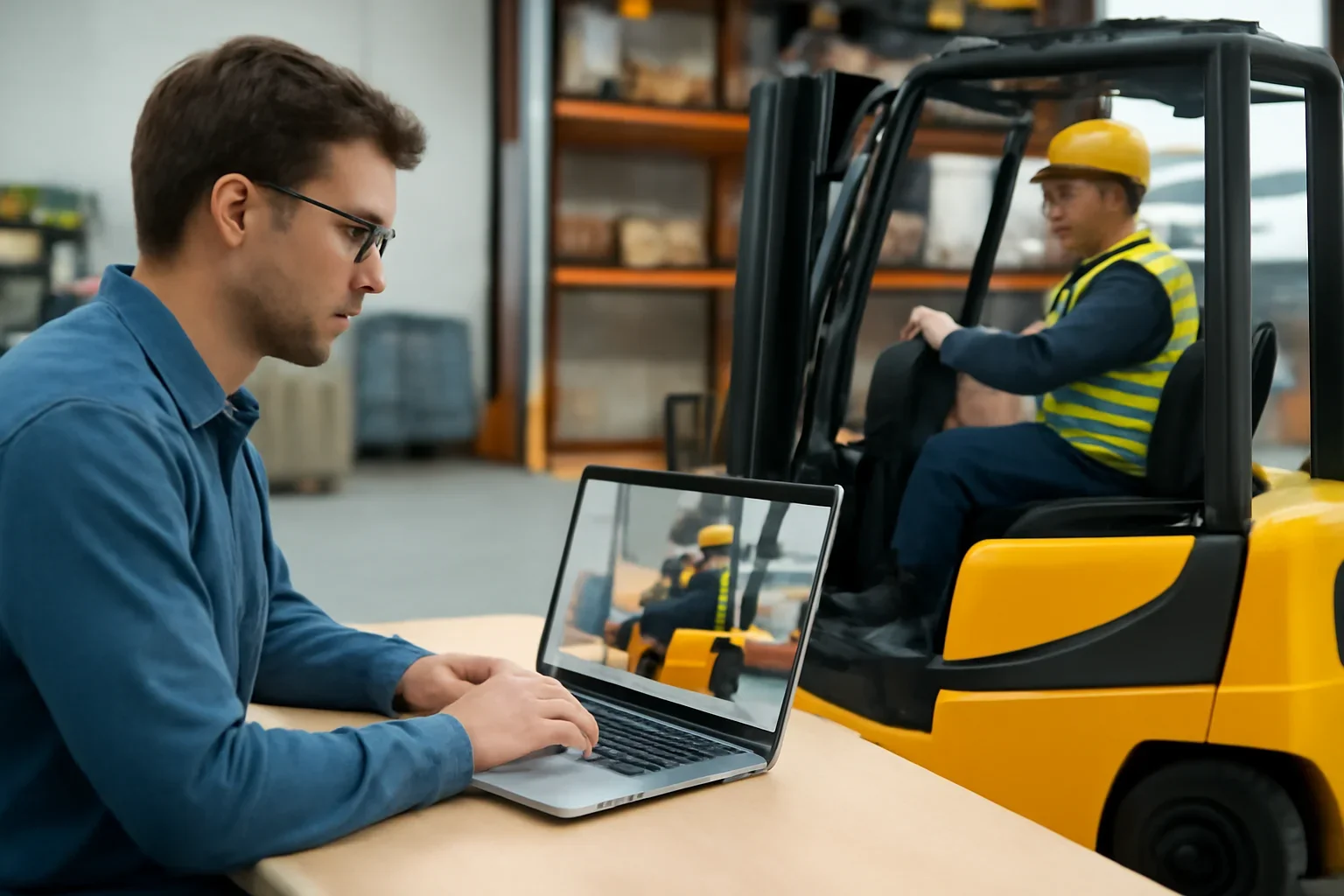
Online vs In-Person Certification is most effective when online delivery is treated as the knowledge portion of a larger process. Teams still need site-specific coaching, observation on the truck, and a record trail that shows the operator was trained on the equipment and environment that matter in the workplace.
Decision-makers comparing online vs in-person certification often get stuck because the visible difference is only part of the story. The better question is how each route affects the full program: theory delivery, evaluation logistics, refreshers, documentation, supervisor oversight, and how quickly the team can respond when a record is needed.

Where teams usually lose momentum with online vs in-person certification is in the handoff between instruction and execution. Theory gets completed, but the evaluation is delayed. A checklist exists, but no one owns updates. Records are stored, but retrieving them takes too long. Tightening those weak points often does more for consistency than adding more material. Common search phrases around this topic include forklift online training vs onsite, best forklift training format.
Use online theory to standardize the knowledge portion
Follow it with practical evaluation in the work environment
Make completion and reminder tracking easier across teams

Online vs In-Person Certification works best when the next action is clear. Gather the truck types involved, the number of operators or sites affected, the records you need to maintain, and any timing pressure around onboarding or refreshers.
Teams researching online vs in-person certification often move next to our pricing page, contact page, and forklift certification hub so the policy, training, and recordkeeping pieces stay connected.
Clear answers are often the difference between a training process that keeps moving and one that stalls when schedules, supervisors, or operating conditions change.
Start with the operating environment, the number of operators involved, how evaluations will be handled, and how easy each option makes recordkeeping. The best fit is the one your team can run consistently.
Not when it creates more manual follow-up, weak documentation, or a poor fit for the trucks and tasks on site. Value usually comes from clarity, consistency, and easier program management.
Map out theory delivery, practical evaluation, reminder timing, record storage, and who owns approvals so the program stays organized once people start using it.